STONE
Rough out, then refine
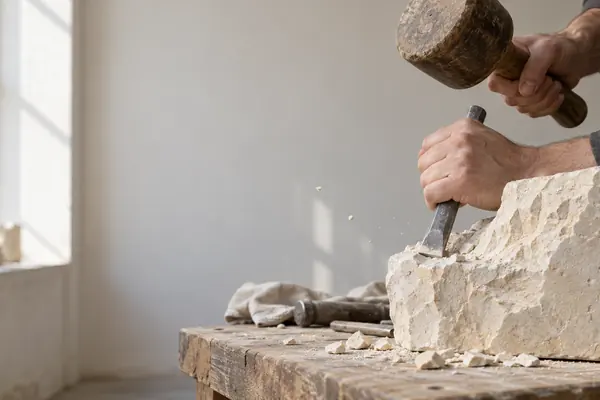
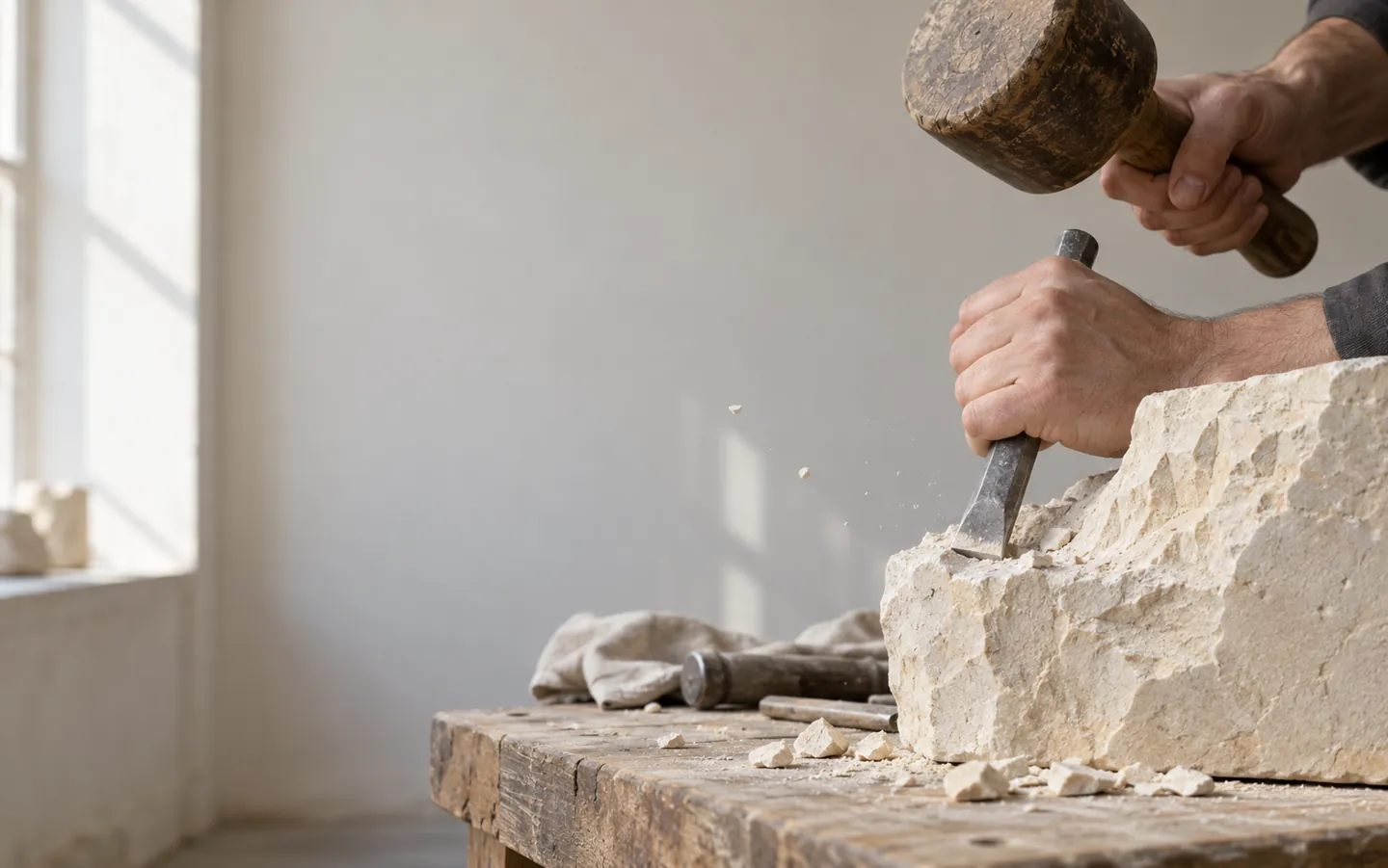
The V&A says stone-carving tools have largely remained unchanged since antiquity: an axe for the basic form, then points, claw chisels and flat chisels, then rasps and polish.
Match a toolWHAT THE MUSEUMS SAY
Every sculpture starts with one of two moves.
Carvers remove stone or wood until the form appears. Modellers push and add soft clay or wax. Museum curators at the V&A, Tate and Musée Rodin describe how both methods work and how they meet.
ROUGH TO FINE axe, claw, chisel, polish
THE SHORT ANSWER
Carving is subtractive, modelling is additive.
Many sculptures used both, one after the other.
STONE
The V&A says stone-carving tools have largely remained unchanged since antiquity: an axe for the basic form, then points, claw chisels and flat chisels, then rasps and polish.
Match a toolCLAY
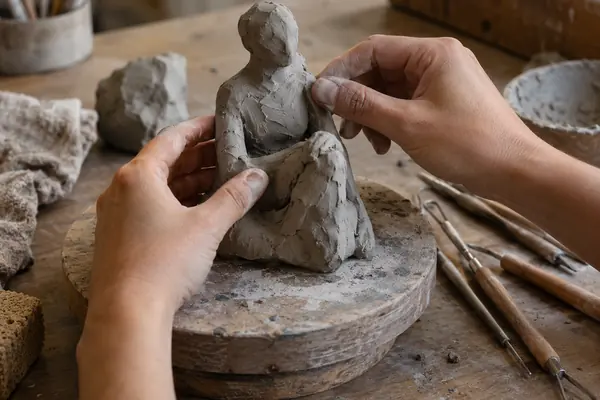
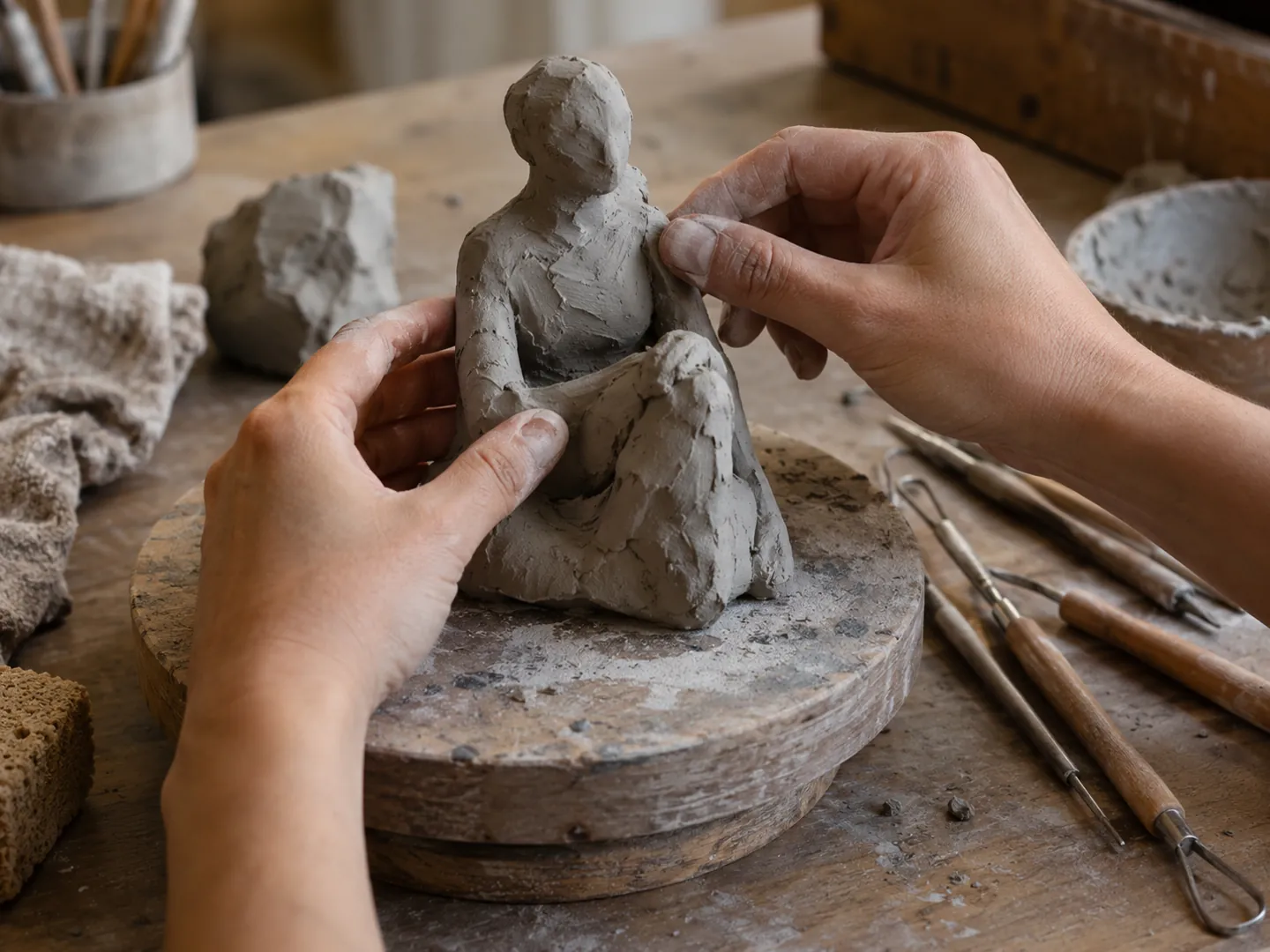
Clay is cheap and versatile. Sculptors often made rapid sketches in clay to capture ideas, then more finished models to show patrons.
From model to marbleWOOD
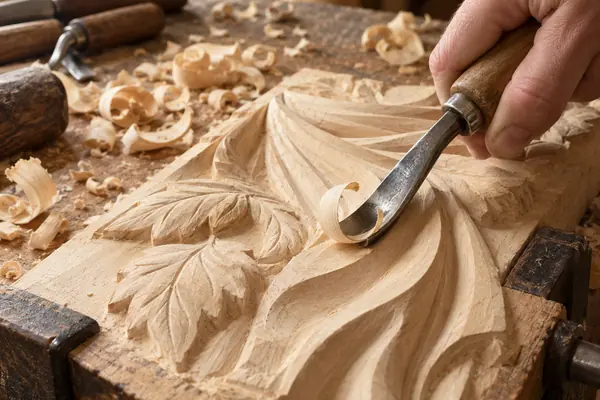
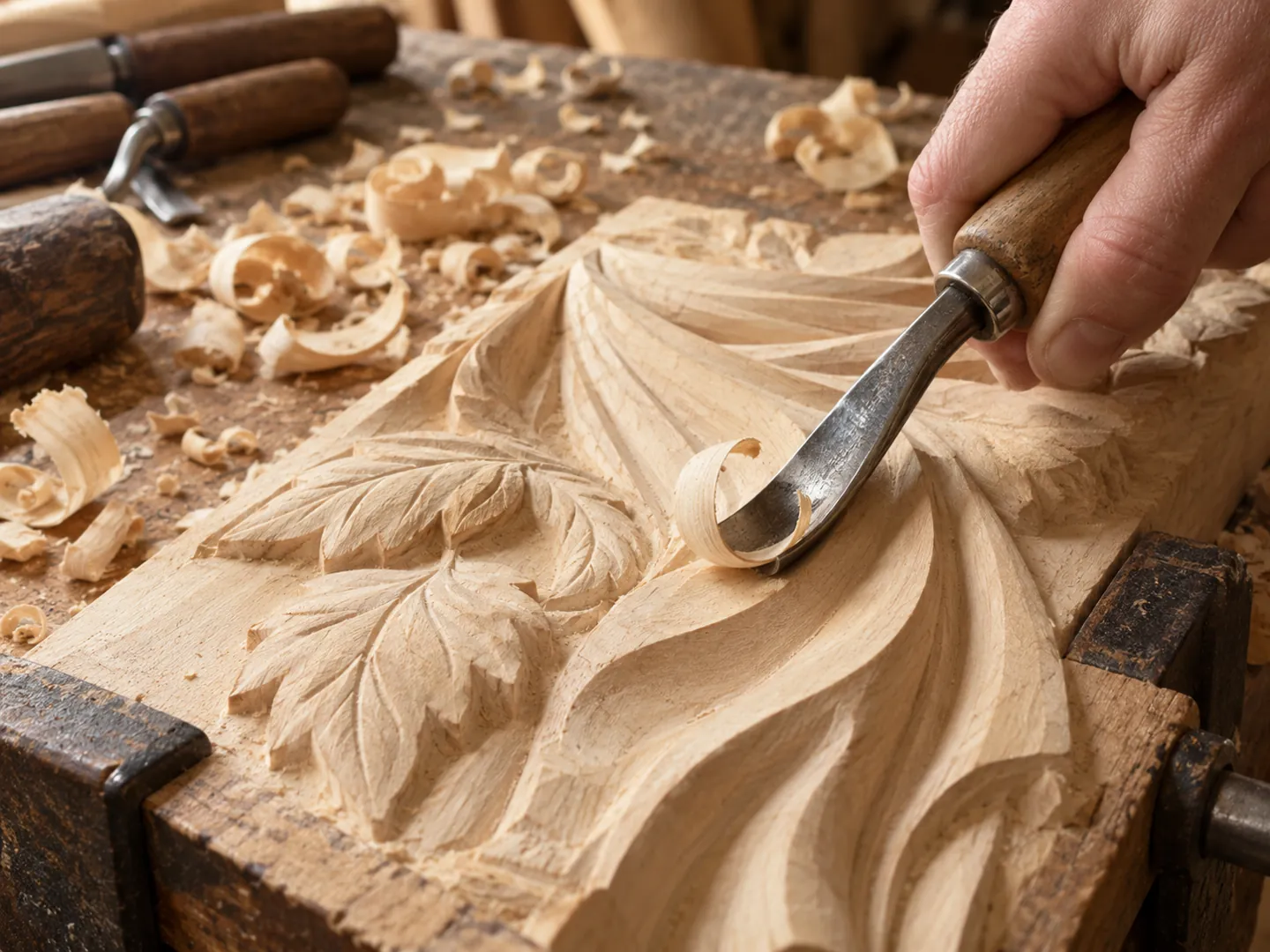
Softwoods such as pine are easier to carve; hardwoods such as oak and limewood are harder but more durable and hold finer detail.
Try it yourselfA QUICK TOOL CHECK
Pick a stone-carving tool to see what it does. The bar shows how fine a finish it leaves, from rough shaping to polish.
Based on the V&A's description of stone-carving tools and the Musée Rodin's account of marble carving.
TWO NUMBERS WORTH KNOWING
One from the carver's stroke,
one from copying a model into marble.
45°
Angle of the mason's stroke
A flat chisel struck at a 45 degree angle leaves a ridged channel, and its edge can be used to define lines.
STONE · V&A
3 compasses
Compasses used to scale a model
The three-compass method let carvers enlarge or reduce a plaster model in marble, finding each point where three measured arcs meet.
MARBLE · MUSÉE RODIN
For copies at the same scale, carvers used a pointing machine instead: an inverted T fixed to matching points on model and block, with a needle that measures how deep to cut.
FOUR STEPS FROM THE STUDIOS
These steps follow the order the museum sources describe, and suit a first project in clay or a soft wood.
Make a quick rough model first. Sculptors used clay sketches to try ideas before committing to harder material.
Softer, less dense materials such as softwoods are easier to carve than dense hardwoods.
Remove the bulk with broad tools first. Roughing tools leave deep, uneven grooves; flat chisels give finer results.
Direct carvers let the block guide the form and kept surfaces simple to bring out the colour and markings of the material.
FROM MODEL TO MARBLE
For centuries a marble sculpture was usually based on a model. The Musée Rodin describes marking points on a plaster model and transferring them to the block with a pointing machine or three compasses, before a skilled carver did the cutting.
Tate explains that from about 1906 some sculptors turned to direct carving instead, letting the process of carving suggest the final form rather than copying a worked-out model, and respecting the nature of the stone or wood.
Questions
Carving removes material from a block of stone or wood. Modelling builds a form by shaping soft material such as clay or wax. The V&A notes sculptors often used clay models when transferring designs into marble.
The V&A explains that fired clay is called terracotta, meaning cooked earth. Firing irreversibly changes the clay, making it stronger, and clay models were sometimes fired to preserve them.
Marble is heavy and brittle. The V&A says many free-standing marble figures in dynamic poses have tree trunks or columns attached to the legs to give a stable base.
The V&A says softwoods such as cedar and pine are coarser, less dense and easier to carve, while hardwoods such as oak, walnut, boxwood and limewood are harder but more durable.
Not always. The V&A notes that classical Greek and Roman marbles would probably have been painted originally, but the paint had worn away by the time they were rediscovered.
Sources
ABOUT THIS NAME
doodlesculpting.com is part of the DoodleSale portfolio. It isn't in an auction right now, but you can ask about leasing it.